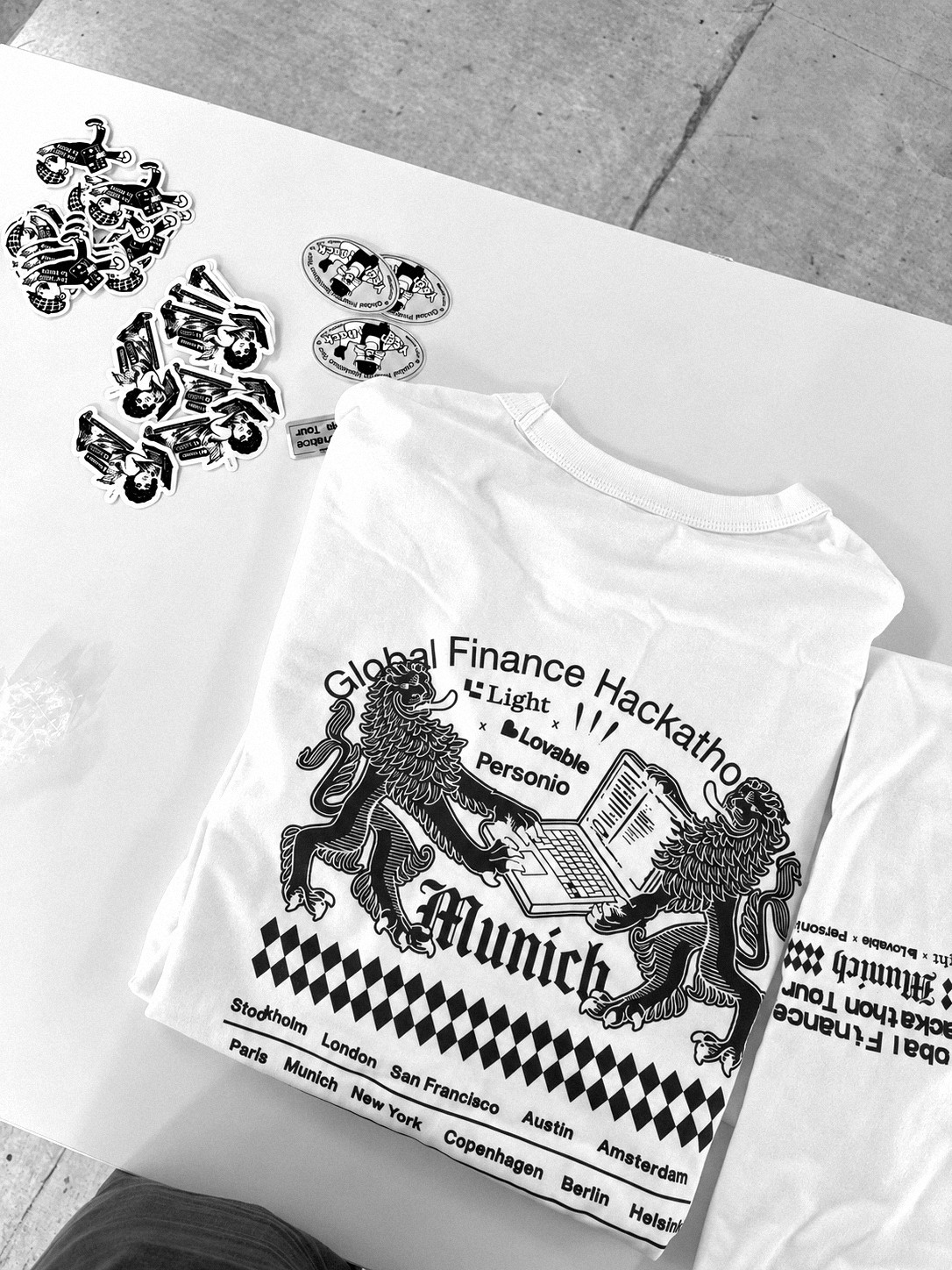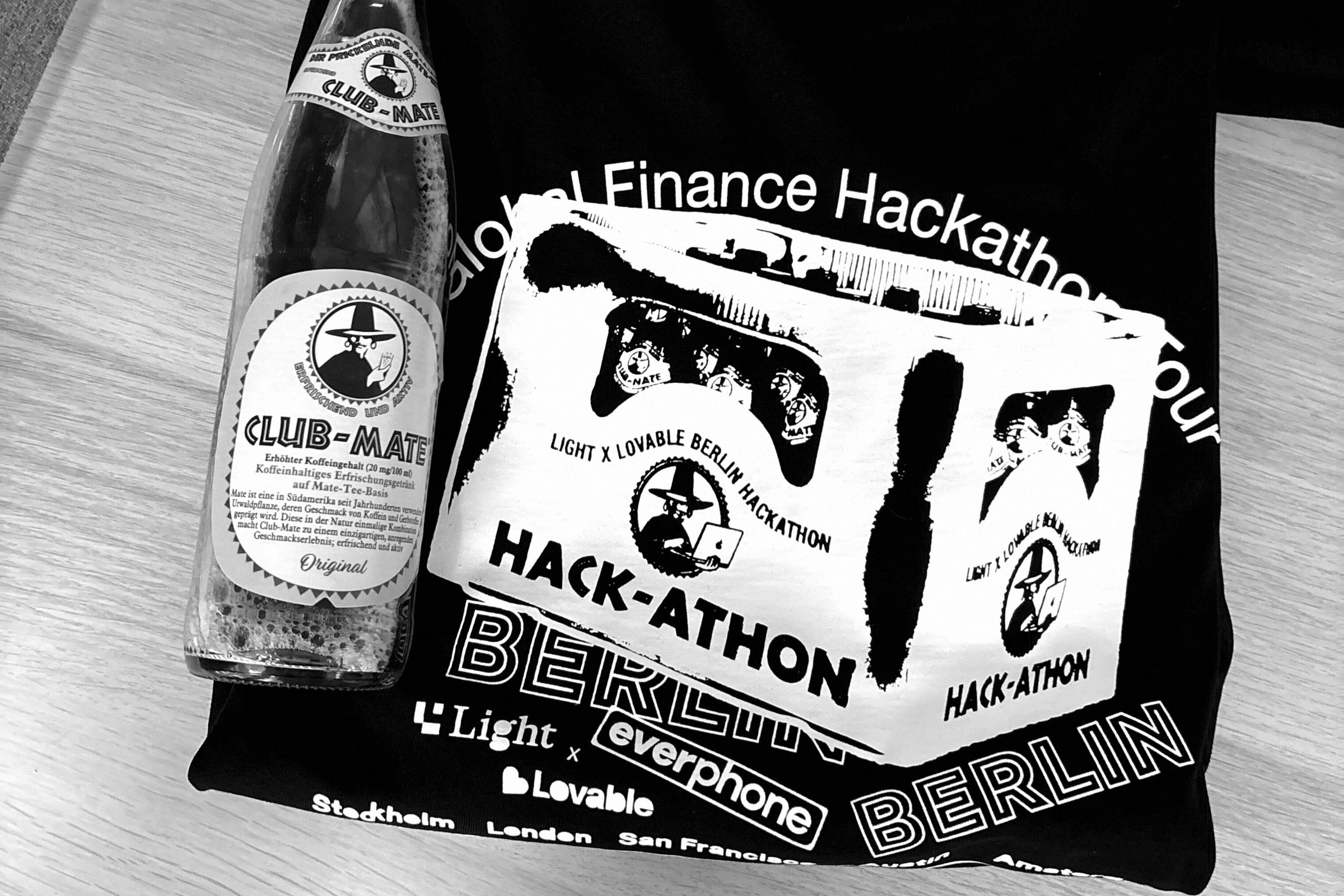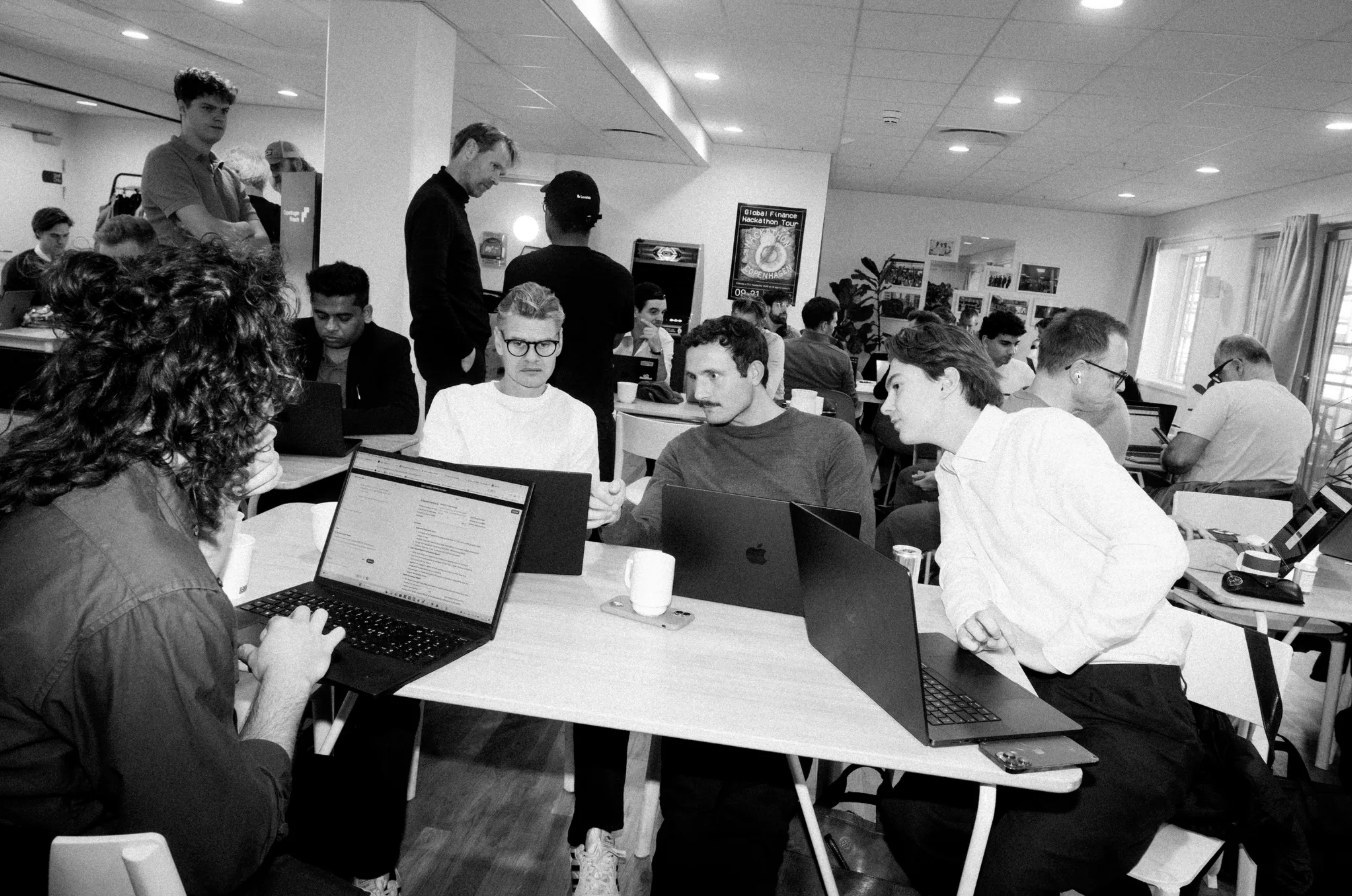

Five days after Munich, the tour arrived in Stockholm, at a venue unlike any we have used before.
Angel House is home to Stockholm's angel investors, a place more used to quiet dinners and term sheets than to rows of open laptops. On 13 October, Light and Lovable joined Grant Thornton there for stop number fifteen on our global Finance Hackathon tour.

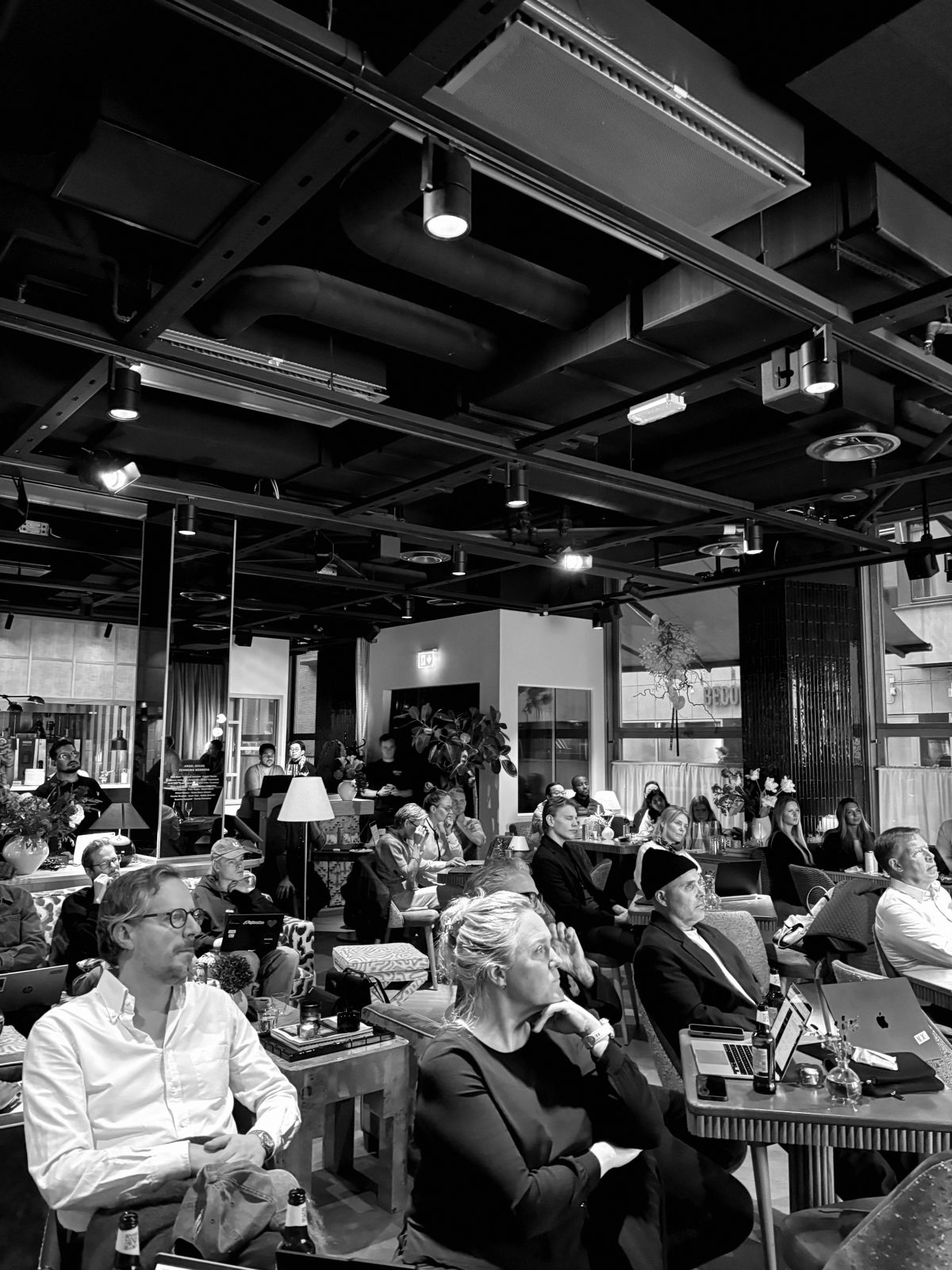
The questions on the tables came from experience. Are we paying more than other companies for the same software? Why is this month's result different from the plan? How do we get budget owners to plan properly without living in spreadsheets? And when marketing asks for money, how do we know what it will return?
By the time the pitches started, those questions had turned into tools people could click through, challenge and keep improving. Three made the shortlist, and one took the win.
The judging panel
The shortlisted teams presented to Rachel from Lovable, Jonas and Agnes from Grant Thornton, and Magnus from Evrock.
Thank you to Rachel, Jonas, Agnes and Magnus for sharing their time and perspective with the builders. A big thank-you to our partners at Grant Thornton for bringing the business side into every conversation, and to Angel House for opening its doors to an afternoon of finance building.
The shortlisted builds
Each shortlisted build started from a problem its builder deals with at work. All of them combined Light data with demo inputs to show what the finished tool could do.
Vendor Management, by Price Patrol
Software bills tend to grow quietly. A company sees its own invoices and its own contract, but it has no way of knowing whether the vendor charges others less for the same product. This team wanted a clear answer for every recurring software vendor: are we paying a fair price, and do the invoices match what we agreed?
Vendor Management answers both on one screen. It sorts every vendor into overpaying, fair price or under market, and flags invoices that drift from the contract. The standout moment comes when a contract enters its final 90 days. The app flags that the negotiation window is open, and if the price sits above market, a negotiation email to the vendor is one click away.
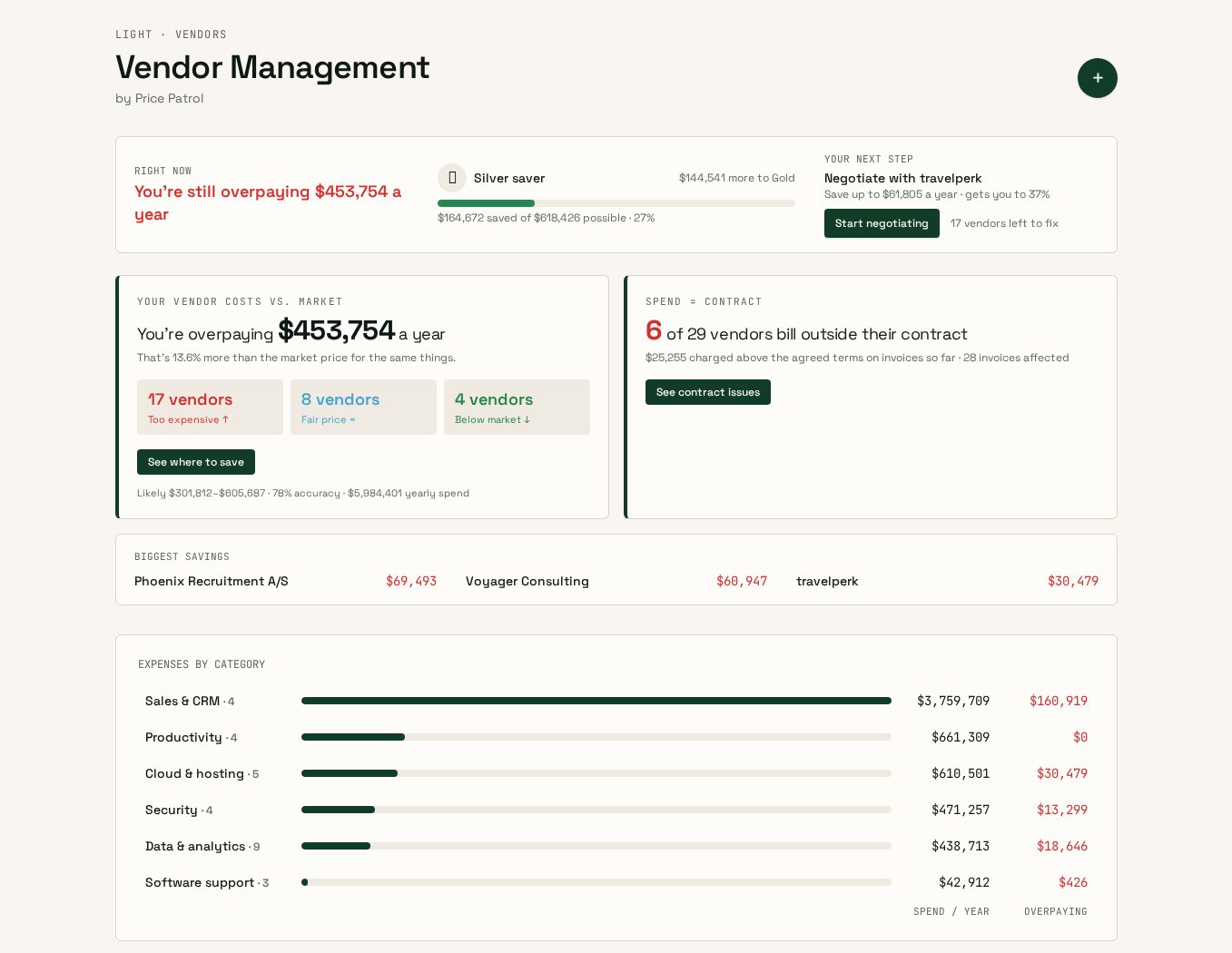 Vendor Management, by Price Patrol
Performance vs plan dashboard
Every month, someone in finance has to explain why the result moved away from the plan. The answer usually lives across a P&L, a few exports and a long thread of follow-up questions. This build brought that work into one view, with the P&L year to date against budget, prior year or forecast.
The best part is the variance bridge. It walks from budget to actual one driver at a time, and every bar opens up: hover to see the account, department and client behind it, or click to filter the rest of the page. Each leader then gets a view with the alerts and actions that need their attention, so the explanation leads straight to a decision.
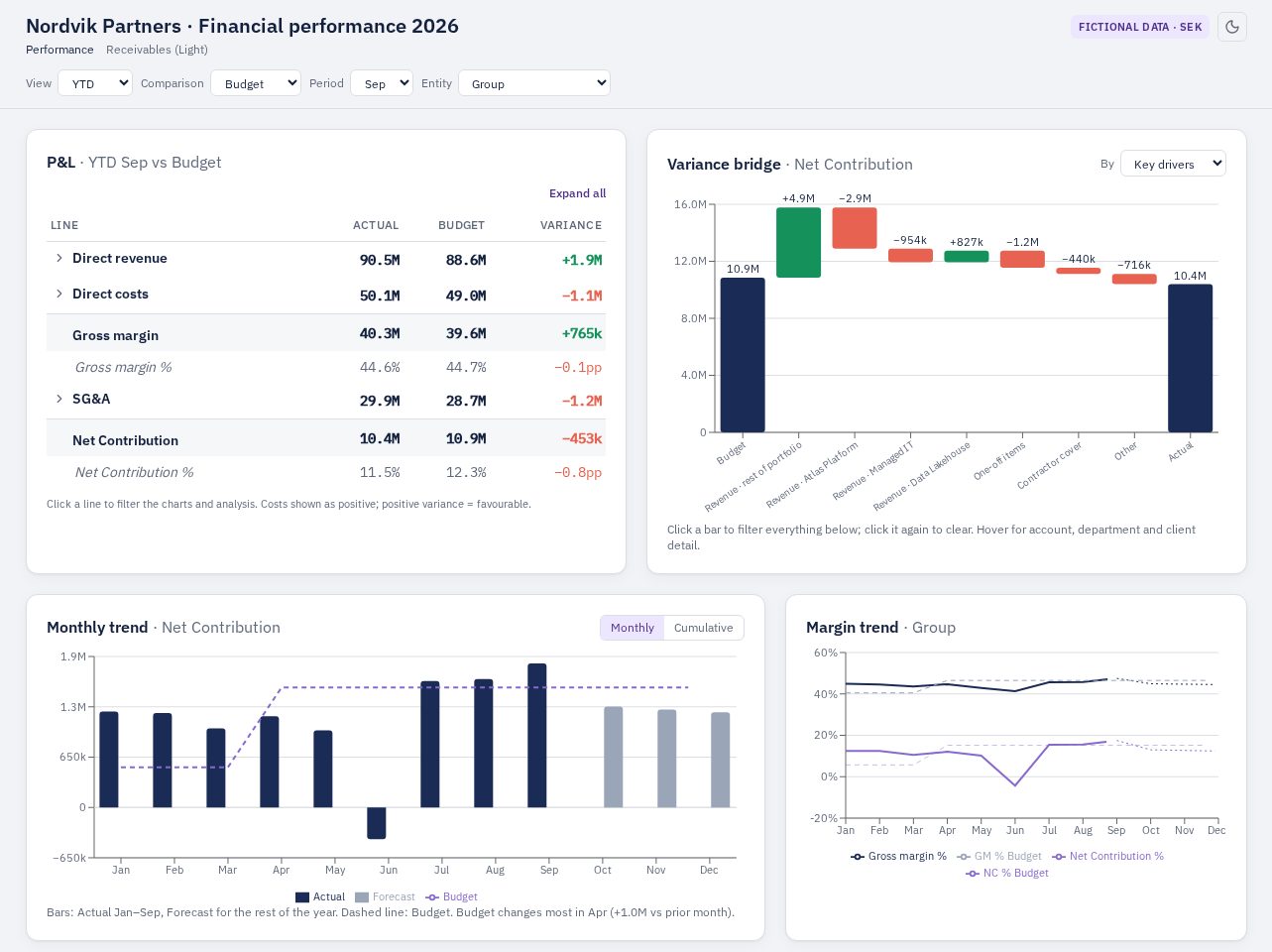 Performance vs plan dashboard
Budget & Forecast Copilot
Budgeting across many units and markets often means one spreadsheet per budget owner, a finance team chasing versions, and new markets with no history to plan from. This build turned that process into a shared budget tool in Swedish, where each budget owner sees only their own units and finance sees the whole company.
Budget owners plan top-down or bottom-up, spread costs across the year with the profile that fits, and submit for finance to approve. The standout is the copilot. Ask "We're below forecast. Where is the problem?" and it points to the largest variances. Every answer comes with a "Visa beräkningen" ("show the calculation") button that lays out the assumptions, formulas and sources behind it.
And the winner is… ValYou
Marketing spend is one of the hardest numbers for a CFO to judge. A stand at an event or a placement in an app can cost hundreds of thousands of kronor, and the case for it often rests on a feeling about brand awareness. ValYou set out to put that decision on the same footing as any other investment.
Pick a package, for example a 20 m² stand plus an app placement, and ValYou works out the total investment, the contribution, the NPV and the payback period. It shows ROI three ways, from hard value only to the full picture including softer brand effects, and labels every line so the reader knows how solid each number is. It compares the result with what the same reach would cost in the brand's usual channels, runs 1,000 scenarios to estimate the chance of a positive return, and brings everything together in a one-page report a CFO can take into a budget meeting.
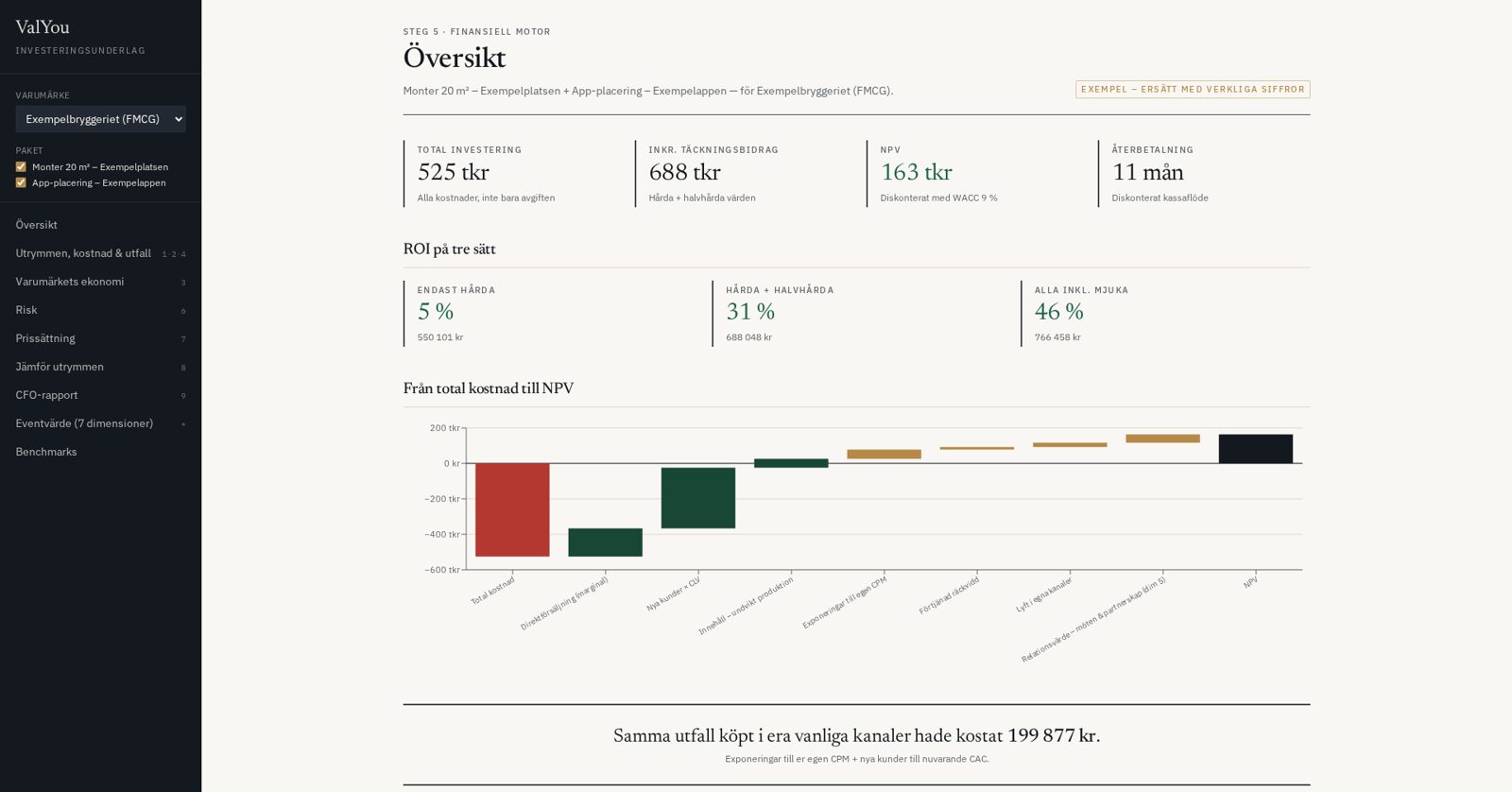 ValYou
 took the win because it gave finance a clear, defensible number for spend that is usually decided on instinct. It also keeps the working visible, so a sceptical CFO can see where each figure comes from and challenge it before any money moves.

A global community of finance builders
We run these hackathons because we are building a global community of new wave finance leaders: people who build the tools their teams need.
Stockholm showed what happens when that community shares a room with the people who fund the next generation of companies. Vendor costs, performance against plan, budgeting and the return on marketing spend are everyday finance problems, and each one now has a working prototype to take back to the office and keep improving. We are already looking forward to the next stop.
Want to join the next one? Explore the Finance Hackathon tour and follow Light on LinkedIn for future dates.