When I ask another engineer to review my code, I'm not simply looking for a second opinion. I'm looking for their opinion.
Some engineers immediately spot unnecessary complexity. Others recognize patterns that have caused problems before. Others challenge the requirements before even looking at the implementation.
That's engineering judgment. And taste.
As AI makes writing code increasingly easy, I believe these qualities are becoming the most valuable currency in software development. Knowing what to build, what to question and what to leave out matters more than ever.
But that judgment is difficult to scale. It's accumulated through years of building software, and much of it lives in the heads of individual engineers.
At Light, we've created a new approach to changing that. We call it developer lenses.
More agents don't mean more perspectives
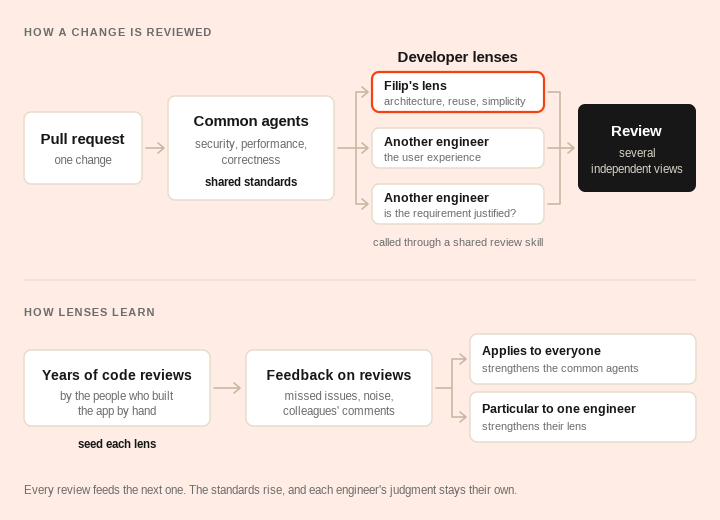
We already use common review agents for security, performance, correctness and other engineering concerns. They enforce shared standards and are essential to our development process.
Much of the industry is focused on making these systems more capable: better codebase understanding, more specialist agents and increasingly comprehensive rules.
All valuable. But there's a limitation.
More agents don't automatically give us more independent judgment.
If every agent shares the same assumptions, they can share the same blind spots.
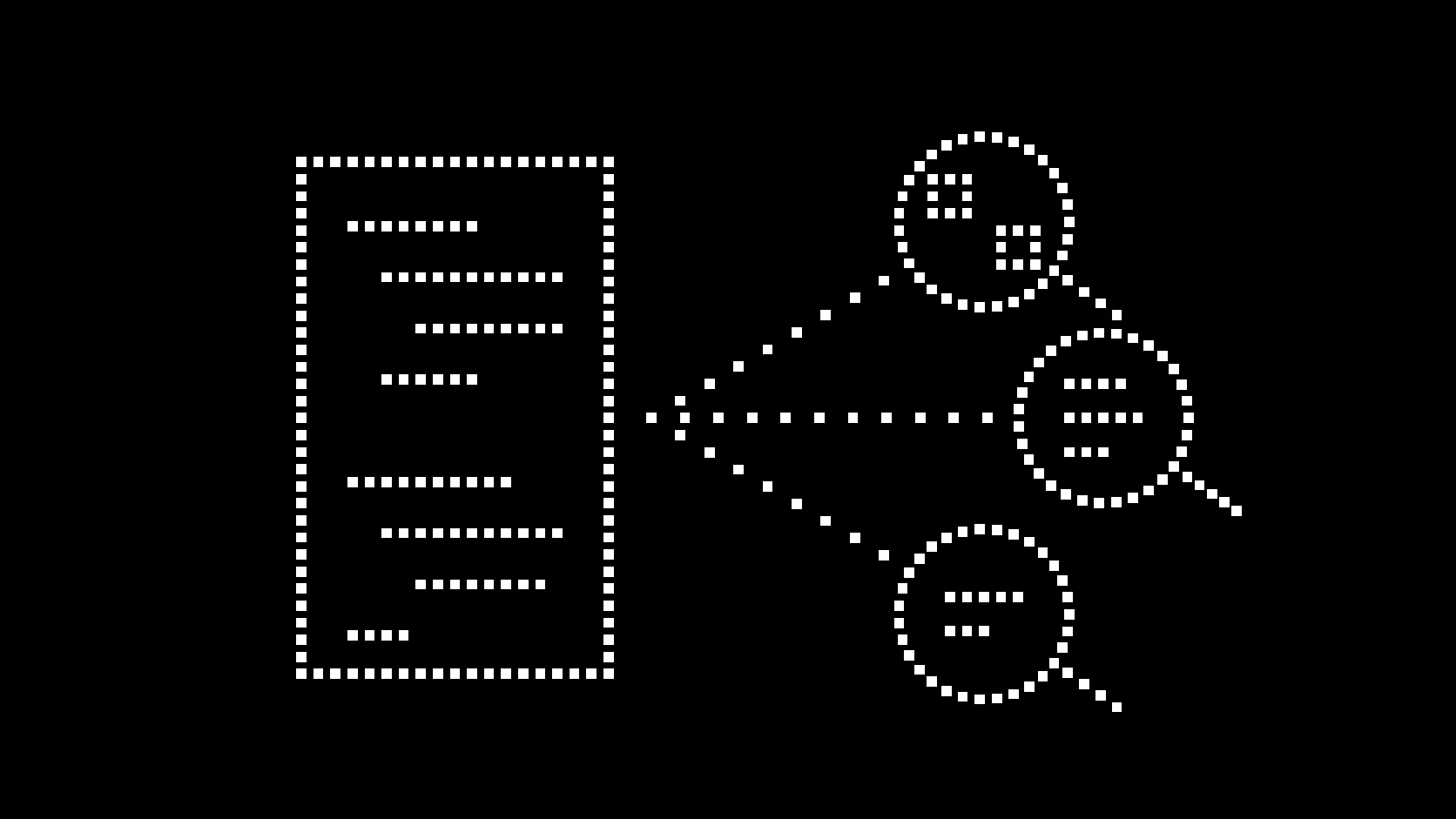
That's why we created developer lenses. Rather than giving every agent the same way of thinking, we're capturing the distinct judgment and taste of the engineers who know our codebase best.
A lens is a structured set of instructions that reflects how a particular engineer approaches writing and reviewing code: what they investigate, what concerns them and which trade-offs they challenge.
Each developer maintains their own lens, which colleagues can invoke through a shared review skill. Our common review agents remain the foundation. Developer lenses add individual perspectives, including additional scrutiny when the central reviewer can't approve a change.
My own lens focuses heavily on architecture, reuse and simplicity. Before examining individual lines, I want to know whether the approach makes sense. Are we introducing unnecessary abstractions? Could we solve the problem with fewer moving parts?
Another engineer's lens might focus on the user experience. Another might challenge whether the requirement itself is justified.
These differences are precisely the point. Good engineering isn't just about following the same rules. It's about applying different experiences and instincts to reach a better solution.
Lenses that learn from experience
Here's what makes developer lenses particularly interesting.
We're not creating generic AI personalities and asking them to behave like senior engineers.
We have years of actual code reviews from the people who built our application by hand.
Those reviews capture decisions, mistakes, recurring concerns and hard-won lessons. They reveal not just what our engineers know, but how they think.
We're using that history to inform lenses grounded in real engineering experience.
And lenses can improve over time. Developers refine their lenses when reviews miss important issues or introduce unnecessary noise. Feedback from colleagues helps distinguish valuable judgment from personal preference.
Lessons that apply universally strengthen our common agents. Lessons particular to an engineer's approach strengthen their lens.
The ambition is to continuously improve our engineering standards without losing the individuality, judgment and taste that make great engineers valuable in the first place.
Building toward organic software
We're building toward organic software: systems that adapt, learn and improve themselves.
As agents take on more of the work of writing, reviewing and maintaining code, the challenge shifts. Producing an implementation gets easier. Knowing whether it's the right implementation remains difficult.
Software that continuously evolves needs more than the ability to generate code. It needs to retain the knowledge, decisions and experience that shaped it.
That's what we're working toward with developer lenses.
I believe the next generation of software engineering won't be defined simply by how much code agents can produce, but by how much human judgment and taste they can put to work.
Code is becoming abundant. Judgment and taste aren't. Developer lenses are how we're beginning to scale what matters most.