Most SaaS finance stacks grow one purchase at a time. A billing tool arrives with the first paying customers, a card provider with the first hires, a planning tool with the first board deck. Each choice makes sense on the day. Three years later, finance spends its month-end moving data between nine systems and explaining why they disagree.
A better stack starts from the question every tool eventually has to answer: where does the transaction land in the books? This guide sets out the layers a B2B SaaS company needs, which jobs belong in the system of record, and how the stack should change as the company adds entities and markets.
What is a B2B SaaS finance stack?
It is the set of systems that turns commercial activity into reported numbers: signing customers, billing them, paying suppliers and staff, managing spend, recognizing revenue, consolidating entities and planning ahead. For a SaaS company the stack usually has seven layers.
| Layer | The job it does | Typical tools |
|---|---|---|
| System of record | General ledger, payables, receivables, close and consolidation | An ERP or finance platform |
| Revenue | CRM, quotes, subscription billing, collection and revenue schedules | CRM, billing platform, payment processor |
| Spend | Cards, expenses, purchase requests and approvals | Card and expense tools, or the finance platform |
| People | HR records and payroll | HRIS and payroll providers |
| Planning | Budgets, forecasts and scenario models | FP&A tools or spreadsheets |
| Cash | Bank accounts, payments and reconciliation | Banks and payment providers |
| Tax | Sales tax, VAT and e-invoicing | Tax engines and local e-invoicing networks |
The layers stay fairly constant. What varies is how many separate products sit inside them, and how much of the work each one hands to finance to reconcile.
Why should the general ledger sit at the center?
Every other layer produces transactions that end up as journal entries. When the ledger is the place those transactions meet, finance can trace any number back to its source. When it sits at the end of a chain of syncs, every handoff becomes a reconciliation that someone owns each month.
That makes the choice of ledger the decision that shapes the rest of the stack. Ask three questions of any candidate.
- Which workflows does it run natively? A ledger that also handles payables, receivables, billing and spend removes whole layers of integration.
- How does it handle more than one entity? A second legal entity is the moment most SaaS stacks break, so test it before you need it. The multi-entity accounting guide covers what to look for.
- How open is it? Specialist tools will stay. An API, native integrations and clean exports decide how much work each one adds.
The general ledger comparison and the AI ERP guide go deeper on the ledger itself.

Which tools belong in each layer?
Here is how the layers map onto Light, which we know best, and where a specialist tool usually stays connected. Other platforms draw the line in different places, so ask every vendor for the same map.
| Layer | Native in Light | Commonly kept and connected |
|---|---|---|
| System of record | Multi-entity accounting, consolidation, AP and AR | |
| Revenue | Subscription billing and revenue recognition, SaaS metrics | Salesforce, HubSpot, Stripe, Chargebee |
| Spend | Cards, expenses and procurement | Existing card programs during a transition |
| Payables | Bill payments and approvals | |
| People | HiBob and payroll providers | |
| Planning | Budgets in the ledger | Abacum, Drivetrain, Pigment |
| Cash | Bank connections and reconciliation | Banks and payment providers |
A blank cell in the first column means Light connects to a specialist tool for that job rather than replacing it. Confirm each integration and its scope for your business during the evaluation; a logo on a page does not tell you which fields move, in which direction or how often.
Revenue: decide where billing ends
The revenue layer causes the most reconciliation work in SaaS. If a billing platform runs subscriptions and the ledger runs revenue recognition, two systems hold a version of each contract. If billing and revenue schedules live in the finance platform, the CRM hands over a signed deal and everything after it shares one record.
Neither is wrong. Keep a specialist billing tool when your pricing needs it, and put the reconciliation on the plan. The multi-entity revenue recognition guide compares both setups for SaaS groups.
Spend: count the systems, not the features
Cards and expenses look like a separate category, but every card transaction becomes a ledger entry with a receipt, a category and an approval. A spend tool on top of the ledger syncs those entries in. A finance platform with native spend posts them directly. Compare the month-end work in each setup, not the feature lists.
Planning: keep it close to actuals
FP&A tools earn their place once the business models scenarios, headcount and drivers. Their value depends on clean actuals, so a ledger with consistent dimensions across entities makes every planning tool better.
How should the stack change as the company grows?
The right stack at seed stage is the wrong one at Series C. Plan the next step before you reach it.
| Stage | What usually changes | What to decide |
|---|---|---|
| One entity, early revenue | Accounting software, a billing tool and a card provider | Pick tools that export cleanly, because you will move off some of them |
| A second entity or first foreign market | Intercompany charges, a second currency, local tax | Whether the ledger handles groups natively or through add-ons and spreadsheets |
| Several entities, audited accounts | Consolidation, revenue policy, controls and approvals | Which layers move into one system of record and which stay specialist |
The ERP migration checklist and the ERP selection criteria help when the time comes to change the core.
What does a consolidated stack look like in practice?
“Everything you need on AP, AR, and general ledger. Nothing more, nothing less.”
KeyShot is a Danish SaaS company with around 150 employees, more than $30M in ARR and entities in Denmark and the United States. Before Light, its finance stack ran separate revenue recognition, HR, purchasing, CRM, planning, payables, expense and bank-connector tools around e-conomic, Excel and Xero.
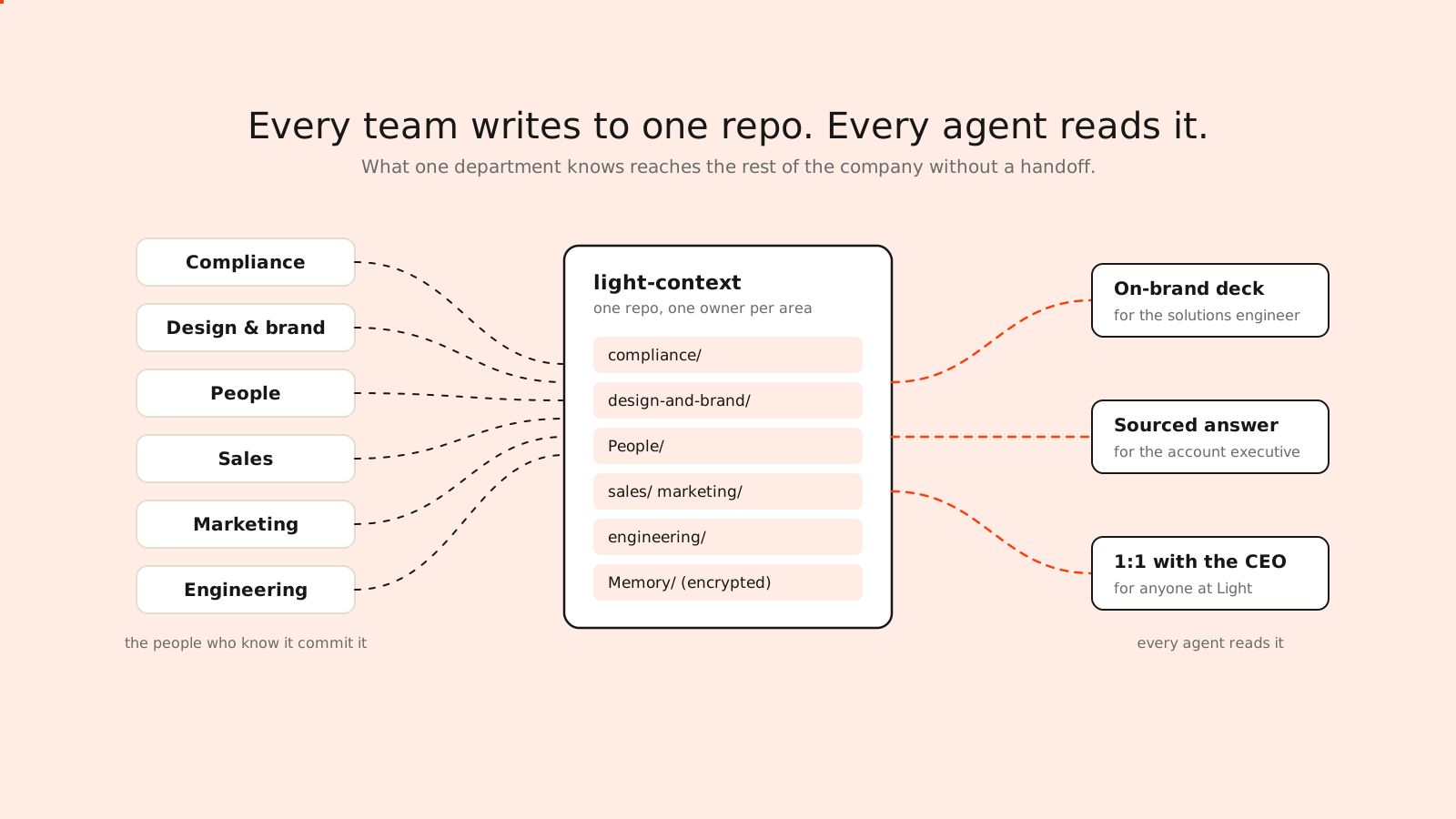
Today AR, AP and the general ledger run on Light across both countries. HiBob, Salesforce, Abacum and its banks stay connected. The finance team of around 12 people runs finance, RevOps and analytics on a stack it describes as built for five times its current scale. One company's result does not predict yours, but the shape is worth copying: one system of record, with a few specialist tools chosen on purpose.
How do you decide what to replace and what to keep?
List every tool in the stack and score it on three things.
- The work it creates. Count the exports, syncs and manual reconciliations it causes each month.
- The work it does well. A specialist tool that runs a complex job better than any platform should stay.
- The cost of moving. Include contracts, migration, retraining and the history you need to keep.
Replace the tools that create more work than they do. Keep the ones that do a job well and connect cleanly. Then test the result with a real month: one customer contract, one supplier bill, one card expense and one intercompany charge, each followed into the group report.
Frequently asked questions
What is the core of a B2B SaaS finance stack? The general ledger, together with payables, receivables and consolidation. Every other tool in the stack produces transactions that land there, so its scope and openness shape the rest of the stack.
Which finance tools does a SaaS startup need first? Accounting software, a billing tool and a way to manage spend. Choose tools that export cleanly, because a second entity or market usually forces a change to the core.
Should a SaaS company use an all-in-one finance platform or best-of-breed tools? Most end up with both: one system of record for the ledger and core workflows, with specialist tools for jobs like CRM, payroll and planning. The decision is where to draw the line, based on the reconciliation work each tool creates.
When should a SaaS company move off small-business accounting software? Usually when it adds a second legal entity, starts consolidating by spreadsheet or needs controls that its auditors expect. Plan the move before month-end starts to slip.
How does Light fit into a SaaS finance stack? Light is the system of record: general ledger, AP, AR, cards and expenses, subscription billing and revenue recognition, and multi-entity consolidation. It connects to CRM, HR, planning and payment tools such as Salesforce, HubSpot, HiBob, Abacum and Stripe.
Light's product and integration information as of November 2026. Integration scope varies by provider and plan. Confirm it for your business during evaluation.