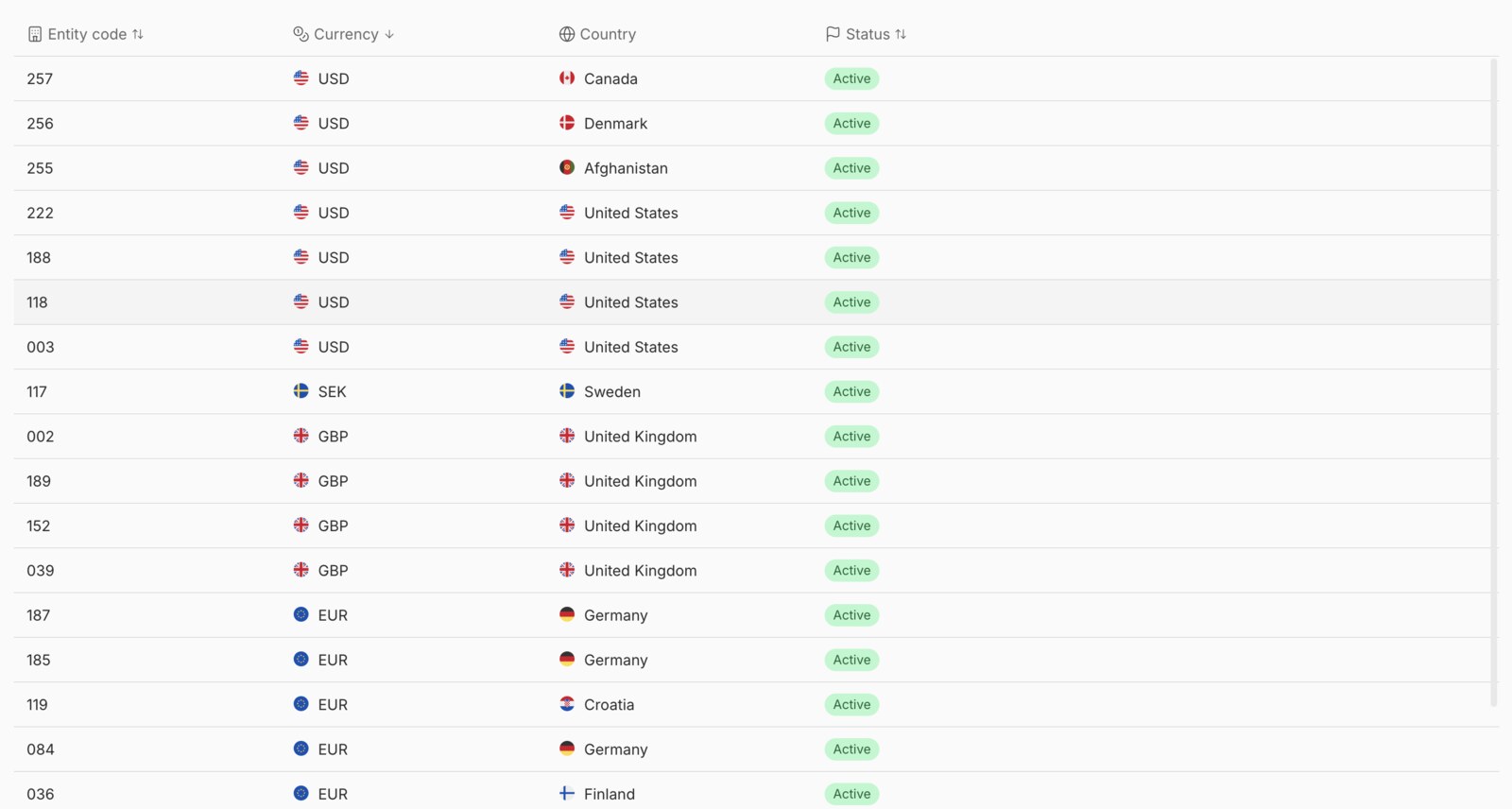
Adding a company can mean adding another export, another account mapping and another reconciliation before anyone can see the group result. Over time, the spreadsheet joining the entities together becomes a system of its own.
Multi-entity accounting software gives finance another way to organise that work. The evaluation should cover both the records each legal entity needs and the shared processes that make reporting across the group manageable.
For an existing setup, the guides to outgrowing QuickBooks and Xero alternatives for multi-entity finance teams compare improving the current system with moving to a shared platform.
What changes when you add another entity?
A new company can bring a different currency, reporting calendar, bank setup or local requirement. Even when each entity's books work well, the group needs consistent definitions and a way to combine the results.
Map those differences before choosing software. A common chart of accounts may help, while some local requirements need distinct treatment or a controlled mapping. The design should make both visible.
The entity management guide separates these accounting needs from legal entity administration, such as maintaining officer and filing records.
What should you evaluate in a shared finance system?
Start with six questions:
- Can finance produce entity and group reports from clearly identified records?
- How does the system share or map accounts, suppliers and reporting dimensions?
- Can the team record and reconcile intercompany activity with a traceable group adjustment?
- How does it handle transaction, functional and presentation currencies?
- Can permissions restrict access and approval authority by entity?
- What work and cost accompany the next entity or reporting change?
Ask for demonstrations using your structure. A product label does not tell you how much configuration or manual work the proposed setup requires.
How do multi-entity accounting, multibook and consolidation differ?
Multi-entity accounting separates records by legal company. Multibook separates accounting treatments by reporting basis. Consolidation combines the parent and subsidiaries into group financial statements, with the necessary adjustments.
| Requirement | Example | What to ask the vendor to show |
|---|---|---|
| Multi-entity accounting | A UK company and a German company each retain their own records | Entity balances, permissions and a transaction traced to the correct company |
| Multibook accounting | One entity reports under local GAAP and the group's IFRS policies | The same transaction in each book, including any different treatment and its adjustment history |
| Consolidation | The group combines both companies and removes internal activity | Entity results, currency translation where needed, eliminations and the group result |
A group can need all three. Keeping several entities in one system does not prove it supports multiple accounting bases, and adding their balances together does not complete consolidation. Ask the vendor to demonstrate each requirement using your own structure and an agreed accounting policy.
Each legal entity still needs its own appropriate records. In Light, documents post to the relevant entity's general ledger, as the multi-entity ledger guide explains. Multibook adds local and group books within that setup. The financial consolidation guide covers the group adjustments, and the worked intercompany example shows why an internal charge remains in entity accounts while disappearing from the consolidated result.
When should you keep separate systems?
A group may retain local ledgers during an acquisition, because of operational requirements or because a wider migration is not yet justified. In that case, focus on reliable transfers, controlled mappings and clear ownership of group reporting.
Compare that ongoing work with the effort of moving to a shared platform. The ERP migration guide helps define the data, history and reconciliation work involved.
Where does Light belong on the shortlist?
Light's multi-entity accounting product and consolidation software address group finance within a shared platform. Evaluate the setup against the entities, currencies, reporting bases and controls your business needs.
Dreamdata's customer story describes bringing three entities, a Danish operating company, a US operating company and a Danish holding company, from separate e-conomic ledgers into Light. The starting problem included different charts of accounts and manual monthly consolidation. That is a concrete example of the entity and reporting work to map before a migration.
Use the general ledger software comparison to assess that choice alongside other approaches. Include the cost of integrations and ongoing administration, as well as the subscription.
Before deciding, ask the vendor to add a representative new entity and produce its first group report. That exercise reveals the work your finance team will inherit as the company grows.
For a sector-specific view, explore accounting software for clinics and accounting software for care homes, including site reporting, supplier workflows and connections to billing systems.
For a numerical bridge between accounting bases, see the local and group depreciation example. For entity currencies and eliminations, use the worked group revenue example.