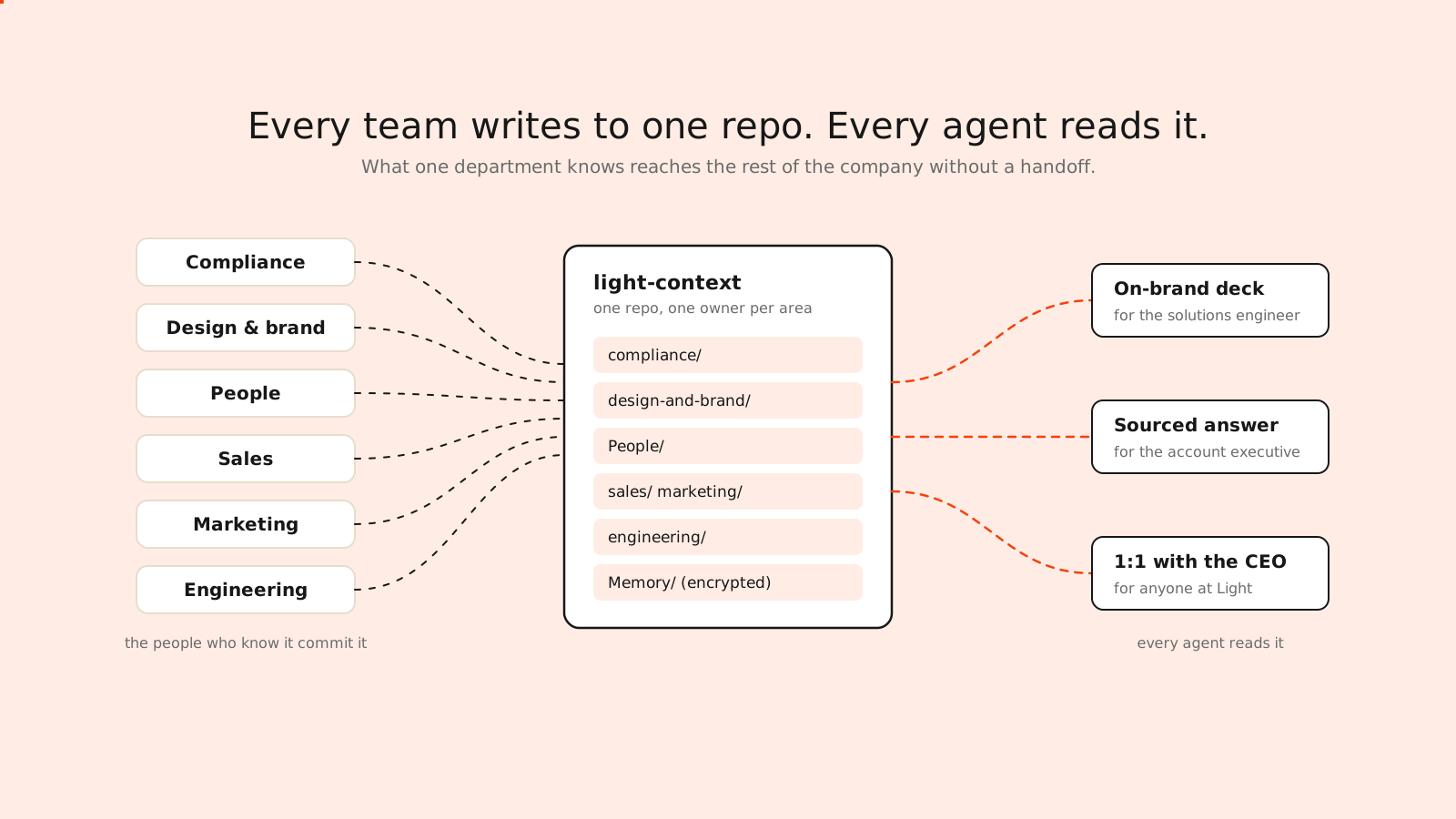

This week, a client asked one of our product managers how a billing flow should work with our API.
The PM explained it, then updated the API docs with better examples of UUIDs and idempotency so the next customer wouldn't need to ask.
A month ago, he probably would have stopped at the explanation.
Updating the docs meant opening a pull request, changing annotation fields, waiting for review, waiting for a build, merging, then waiting for Mintlify to publish it. An hour of process, plus another person's time.
We had the same problem everywhere.
Our marketing site was in Framer. Our help center in HubSpot. Our API docs in Mintlify. Our trust center in Vanta.
If the VP of Marketing needed to tweak an animation, he needed to go to the designer and the developer and explain himself so they could change it.
If the Solutions Engineer saw a help article on Contract Subscriptions missing a good example he just worked on, he would need to contact support and explain himself so support could change it.
If support saw a lot of questions on how idempotency worked, they would need to go to Product and explain themselves so product could change it.
Etcetera, etcetera.
Tools with natural owners that sat on top of our core codebase. People would figure out how the codebase/product worked, and update articles and content in Framer, Mintlify, Hubspot or Vanta.
We moved all four surfaces next to the codebase.
Framer, Mintlify, HubSpot, and Vanta went away. The content moved into our GitHub repos, next to our main codebase. All sub-pages on brand. light.inc/trust and not trust.light.inc with some colours and logos we uploaded on the software vendor's portal. 100% on brand. 100% up to date. 100% cheaper.
We saved $15,000–$20,000 a year on Framer and Mintlify alone.
More importantly, the documentation got better.
A PM talks to a customer and adds the missing example. Support answers the same question twice and fixes the article. An engineer changes a feature and updates the explanation while the context is fresh.
A customer asks a question. An agent reads the docs, answers it, notices what was missing, and updates the source. If expert review is needed, it routes the change.
Most of what a company knows lives in the heads of the people doing the work. And increasingly, the Agents.
Historically, writing it down meant switching tools and starting a separate process.
Now it happens as part of the work itself. With all the benefits of rollback, audit trails and security we get out of the box with github.
AI makes software flatter, faster and better. The distance between the knowledge and the agent consuming it becomes shorter and shorter.