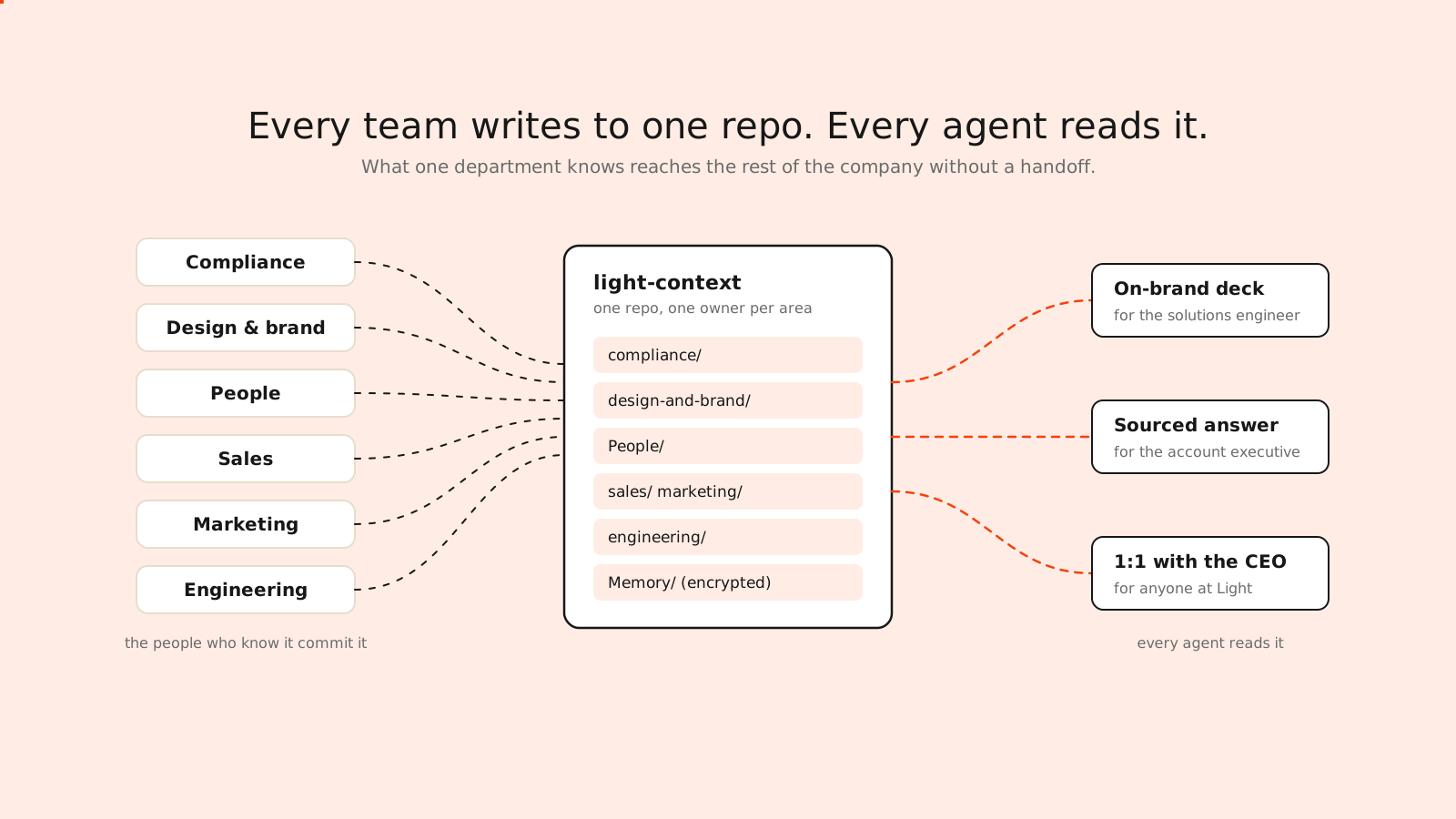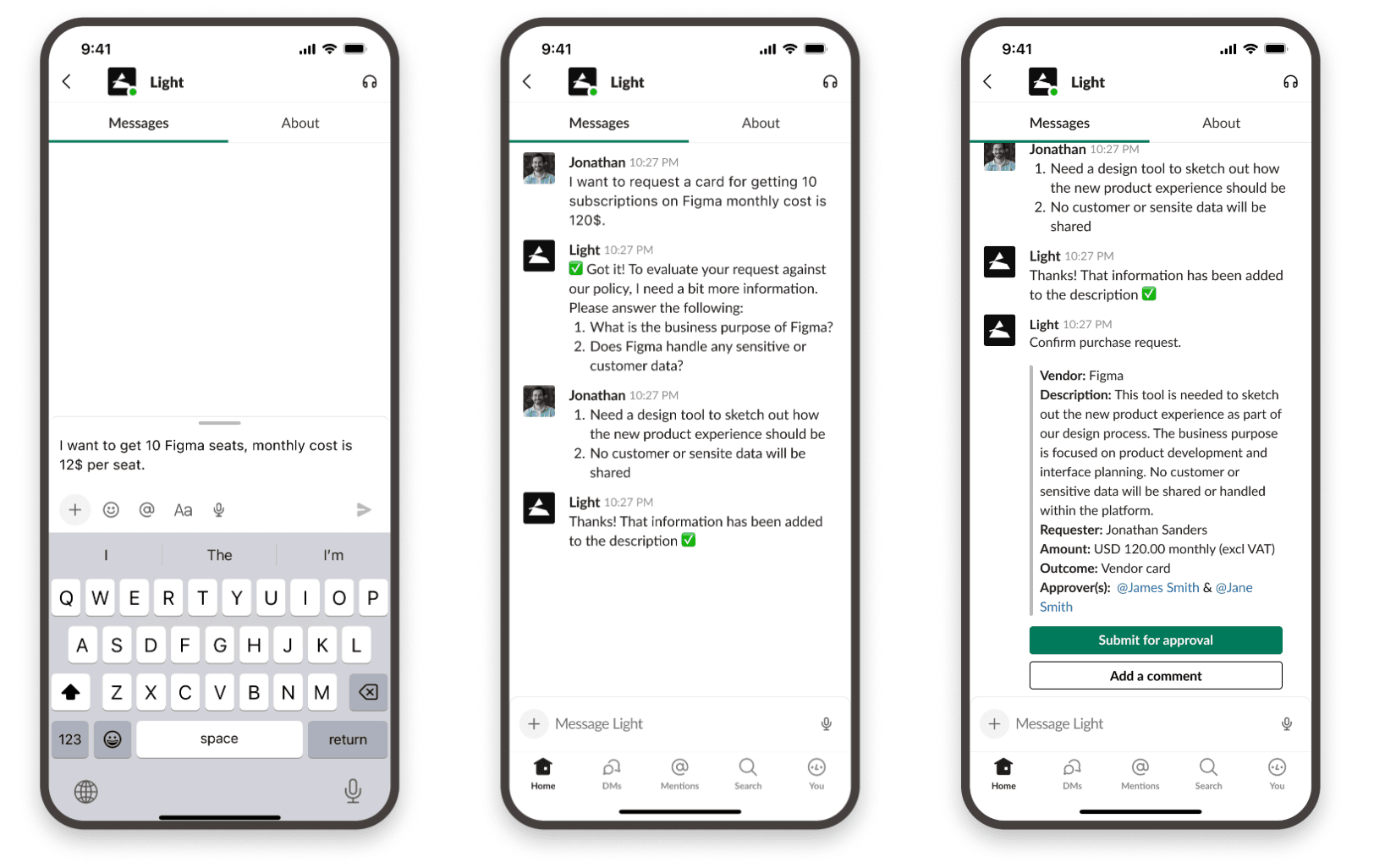
By the time an invoice reaches finance, the important purchasing decisions may already have been made. The contract is signed, the supplier has started work and someone needs to explain which budget will cover it.
Choosing procurement software starts with deciding where the business needs more control over that process. Some teams need earlier legal and security review; others need a dependable route from purchase request through delivery and payment. Build the shortlist around that gap.
This is Light's editorial assessment of public product information checked on 28 September 2026. The shortlist groups products by likely fit; it does not represent an independent performance ranking.
Which criteria should come before the shortlist?
Take ten recent purchases, including a few that surprised finance. Identify when the business committed to spend, who approved it, where the contract lives and how someone confirmed delivery.
From that sample, define the required scope. Include requester experience, approval routing, supplier information, purchase orders, receiving and the connection to accounts payable. For each item, decide who will maintain the process after launch.
Adoption belongs in the evaluation. Ask a regular employee to submit a request and find its status without a guided demonstration. Then ask an approver to handle a request with missing information.
Which procurement products suit different needs?
| Product | Best for this buying situation | Demo to prioritise |
|---|---|---|
| Coupa | A broad programme covering purchasing and supplier spend | Request, approval, invoice matching and ERP handoff |
| Zip | Coordinating intake and approvals across teams and systems | A request involving finance, legal and security |
| Procurify | Establishing a controlled purchasing and receiving process | Purchase order, partial receipt and invoice follow-up |
| Light | Connecting finance-led purchasing with bills, approvals and the ledger | Purchase request through to the accounting record |
Coupa, Zip and Procurify offer distinct procurement starting points. Light belongs on the shortlist when the purchasing problem forms part of a wider finance platform decision. Match the product scope to the process you intend to change.
Coupa
Best for: a business evaluating a broad procure-to-pay programme.
Coupa's product brief covers requisitions, approvals, invoice matching and spend visibility. Test how the proposed configuration connects with your existing ERP.
Less suitable when: the immediate need is a small approval process and the team has no capacity for a broader rollout. Compare the implementation scope with the problem's size.
Zip
Best for: coordinating procurement requests across several functions and systems.
Zip's platform overview describes intake, workflow routing, vendor information and integrations. Use a purchase that needs several different reviewers to evaluate the handoffs.
Less suitable when: the core requirement is to replace the accounting ledger. Treat procurement orchestration and general ledger selection as separate decisions.
Procurify
Best for: teams formalising purchase requests, purchase orders and receiving.
Procurify's procurement product covers those purchasing steps. Demonstrate a split delivery and the effect on the open order and invoice process.
Less suitable when: the project needs a wider finance system replacement. Confirm how purchasing data reaches the ledger and who owns that integration.
Light
Best for: finance teams bringing purchasing controls and supplier payments closer to the ledger.
Light's workflows cover conditional approval routing, while its bill payment software connects bills, approvals and payment. Evaluate the full sequence against your purchasing policy.
Less suitable when: the brief centres on specialist sourcing, complex inventory operations or supplier risk requirements outside the demonstrated finance workflow. Don't infer that coverage from a general procurement label.
What should you check before signing?
Run a request without a PO, a partial delivery and a disputed invoice through the proposed process. Ask who resolves each exception and where the evidence stays.
Use the three way matching guide to distinguish amount matching from receiving controls. Then follow the invoice through accounts payable automation. A procurement process succeeds when employees use it and finance can follow the commitment all the way through.