An invoice can agree with the purchase order even when the delivery is incomplete. Paying it in full without checking what arrived leaves finance to resolve the difference later.
Three way matching brings the supplier invoice, purchase order and receiving evidence together before payment. The useful question is what happens when they disagree, and whether the person reviewing the bill has enough information to resolve it.
How does a three way match work?
Consider an illustrative order for ten monitors at €200 each, excluding tax. The supplier delivers eight and sends an invoice for all ten.
The invoice total matches the €2,000 PO, so an amount comparison between those two documents would pass. The receiving record shows a different position: the business has confirmed delivery of €1,600 of goods.
The team needs to investigate the remaining two monitors and decide the payment treatment under its policy and commercial terms. It should not treat a matching PO total as proof of complete delivery.
The accounts payable automation guide places this control within the wider supplier process.
How is three way matching different from two way matching?
Two way matching compares the invoice with the purchase order or another agreed purchasing record. Three way matching adds receiving evidence.
Neither label tells you the detail of a product's check. Ask whether it compares totals or line items, how it handles quantities and prices, and which tolerances the team can configure.
A successful match also does not establish every aspect of a transaction's legitimacy. Supplier verification, bank detail controls, duplicate checks and payment approval serve separate purposes.
What changes for services and subscriptions?
Receiving evidence may be acceptance of a milestone, confirmation of a service period or another record appropriate to the contract. Decide who can provide that evidence and what they need to confirm.
Do not make the receipt a box that finance ticks on behalf of someone who knows whether the work happened. The control depends on the quality of the confirmation, not only on the presence of a third record.
Some purchases follow an approved process without a PO. Define the alternative evidence and approval route explicitly instead of letting those invoices bypass review through an informal exception.
How should the process handle discrepancies?
Distinguish a price difference from a quantity difference or a missing receipt. Assign the issue to someone who can resolve it, retain the correspondence and record any authorised override.
Test partial receipts and repeated invoices against the same order. The system should help the reviewer understand what remains open and whether the cumulative billing exceeds the relevant authorisation or delivery evidence.
The procurement software comparison includes receiving and requester adoption in the buying criteria.
What should you verify in Light?
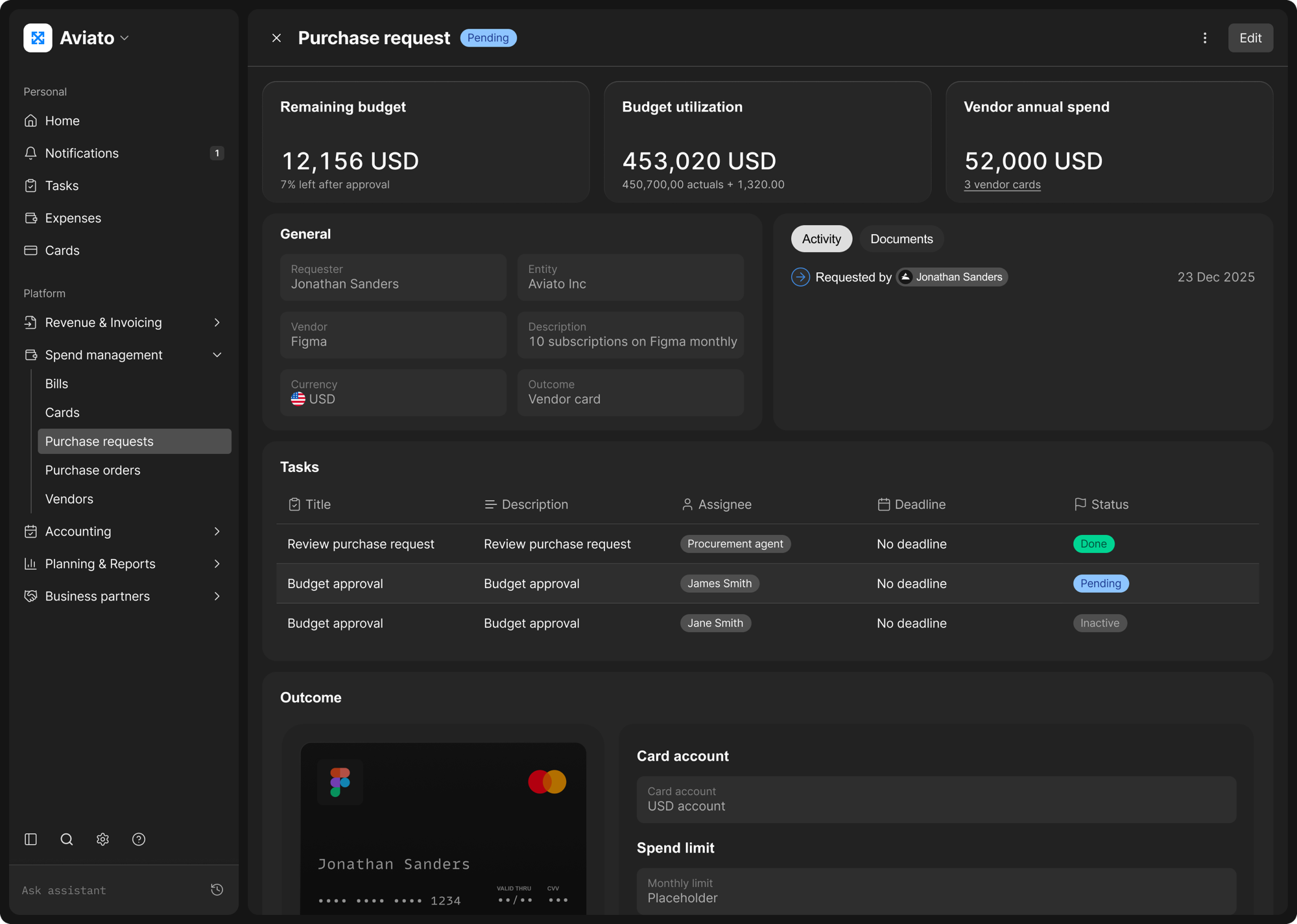
Light's purchase-order guide describes automatic linking of eligible bills to open purchase orders using the PO number and recognised vendor. It also explains manual matching, inherited coding and the running billed and remaining totals.
That linkage gives the reviewer purchasing context. The wider bill payment and approval workflow processes need to fit the company's control policy too. Treat receiving evidence, line-level quantities and tolerances as separate acceptance requirements, and ask the product team to show how the required control will operate before relying on it.
Measure the proportion of relevant invoices with complete supporting evidence, the age of discrepancies and the use of overrides. The internal controls guide explains how to retain evidence that the control operated, rather than relying on a policy statement alone.